
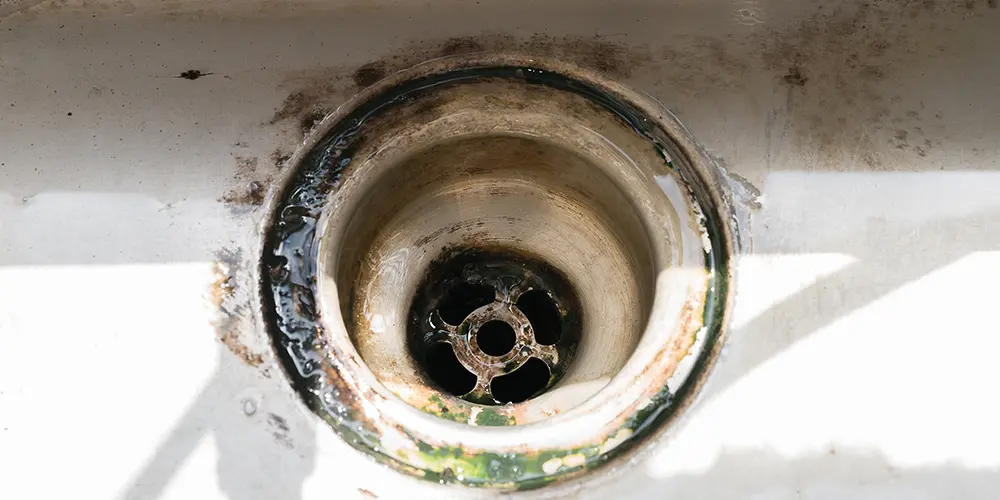
Have you ever wondered what that black, slimy buildup around the drain really is?
More than just an eyesore, black slime can cause odors and signal hidden buildup in your plumbing. It’s a common problem that’s easy to remove and prevent once you know what’s causing it.
Let’s uncover where black slime comes from and how to keep it from coming back.
What Is Black Slime, Exactly?
Black slime is a slippery, dark film that builds up inside drains, around stoppers, and along pipe walls. It’s not just dirt. It’s a living buildup.
- A mix of bacteria and fungi. The slime is mostly a biofilm, a colony of microorganisms that stick together and cling to wet surfaces.
- Trapped organic material. Food scraps, soap scum, skin cells, hair, and grease feed these microbes.
- A natural reaction to moisture. Drains stay damp, dark, and warm, which is the perfect environment for slime to grow.
In short, black slime forms when bacteria find a steady food source in a moist, low-light environment.
The Most Common Causes
Several habits and conditions feed the buildup. Here are the usual culprits.
- Soap and shampoo residue. These leave a sticky film that microbes love to feed on.
- Toothpaste and personal care products. Bathroom sinks often collect a thick, dark slime from daily grooming.
- Food and grease in kitchen drains. Leftover bits and oils create a rich feeding ground.
- Hard water minerals. Mineral deposits give bacteria more surfaces to cling to.
- Standing water. Slow drains keep moisture in contact with organic waste longer.
- Infrequent cleaning. The longer the buildup sits, the more it grows.
Where Black Slime Typically Forms
Slime doesn’t appear everywhere at once. It tends to gather in specific areas.
- Around the drain opening. This is usually the first place you’ll spot it.
- On the sink stopper or pop-up assembly. Pull yours up, and you may find a slimy coating underneath.
- Inside the overflow hole. Bathroom sinks often hide slime in this hard-to-see opening.
- Along the upper pipe walls. The P-trap and the section just below the drain collect plenty of residue.
- Garbage disposal splash guards. The rubber flaps trap food and stay damp.
Warning Signs to Watch For
Black slime often announces itself before it becomes a major problem. Watch for these signals.
- Foul or musty odors rising from the drain.
- Slow drainage as buildup narrows the pipe.
- Visible dark gunk around the opening or stopper.
- Gnats or small flies near the sink, drawn to the organic matter.
- A slippery feel when you touch the inside edge of the drain.
If you notice any of these, it’s time to clean before things get worse.
How to Prevent Black Slime
Prevention is far easier than scrubbing out a heavy buildup. Build these simple habits into your routine.
- Rinse with hot water daily. A quick flush helps wash away residue before it settles.
- Wipe the drain area regularly. A weekly wipe of the stopper and opening goes a long way.
- Avoid pouring grease down the kitchen sink. Let it cool, then toss it in the trash.
- Use a drain strainer. Catching food and hair stops slime before it starts.
- Clean the stopper weekly. Pull it out, scrub it, and rinse it well.
- Run cold water while using the disposal. It helps push waste through instead of letting it linger.
Safe Cleaning Methods
When slime appears, you can usually handle it yourself with simple supplies. Try these gentle, effective options.
Baking soda and vinegar
- Pour half a cup of baking soda into the drain.
- Follow with a cup of white vinegar.
- Let it fizz for 10 to 15 minutes.
- Flush with boiling water.
Hot water and dish soap
- Mix a few drops of dish soap into a pot of hot (not boiling) water.
- Pour it slowly down the drain to break up grease and film.
Manual scrubbing
- Remove the stopper and overflow cover if possible.
- Use an old toothbrush or bottle brush to scrub the buildup.
- Rinse thoroughly with hot water.
A few quick tips
- Wear gloves to protect your hands.
- Avoid mixing cleaning chemicals, which can create dangerous fumes.
- Skip harsh chemical drain cleaners whenever possible, as they can damage pipes over time.
Repeat your chosen method every couple of weeks for stubborn buildup.
When to Call a Professional
Most slime problems are easy to fix with a DIY solution. But sometimes the issue runs deeper. Reach out to a plumber if you notice:
- Recurring slime that returns no matter how often you clean.
- Persistent odors that cleaning doesn’t solve.
- Slow drains across multiple fixtures, which can point to a clog deeper in the line.
- Standing water that won’t clear.
- Gurgling sounds from the drain or nearby pipes.
A professional can inspect your pipes, clear hidden blockages, and check for venting or sewer issues you can’t reach on your own.
The Bottom Line
Black slime is your drain’s way of telling you it needs attention. It forms when bacteria feed on the soap, food, grease, and grime that wash down every day. The fix is simple: clean regularly, rinse often, and catch debris before it builds up.
Stay consistent with a few small habits, and you’ll keep your drains fresh, fast, and slime-free for the long haul.
FAQs: Black Slime Buildup
Q: Is black slime in my sink dangerous?
It’s usually not harmful in small amounts, but the bacteria and fungi can spread odors and worsen hygiene. It’s best to clean it promptly.
Q: Why does black slime keep coming back?
Slime returns because microbes regrow whenever organic residue builds up. Regular cleaning and the use of a strainer help break the cycle.
Q: Can black slime clog my drain?
Yes. Over time, the buildup narrows your pipes and slows drainage, which can lead to full clogs if ignored.
Q: Is the black slime mold?
It’s often a mix of bacteria and fungi rather than true mold, though mold can grow alongside it in very damp conditions.
Q: Will bleach get rid of black slime?
Bleach can kill the bacteria, but it may not remove the buildup itself. Scrubbing plus a flush usually works better and is gentler on pipes.
Q: How often should I clean my drains?
A quick weekly wipe and a deeper clean every two to four weeks keep most slime at bay.
Q: Does black slime cause sink odors?
Yes. Decomposing organic matter and bacteria are common sources of musty or foul drain smells.
Q: Can I prevent slime without harsh chemicals?
Hot water rinses, baking soda and vinegar, and a simple drain strainer are effective, pipe-friendly options.