
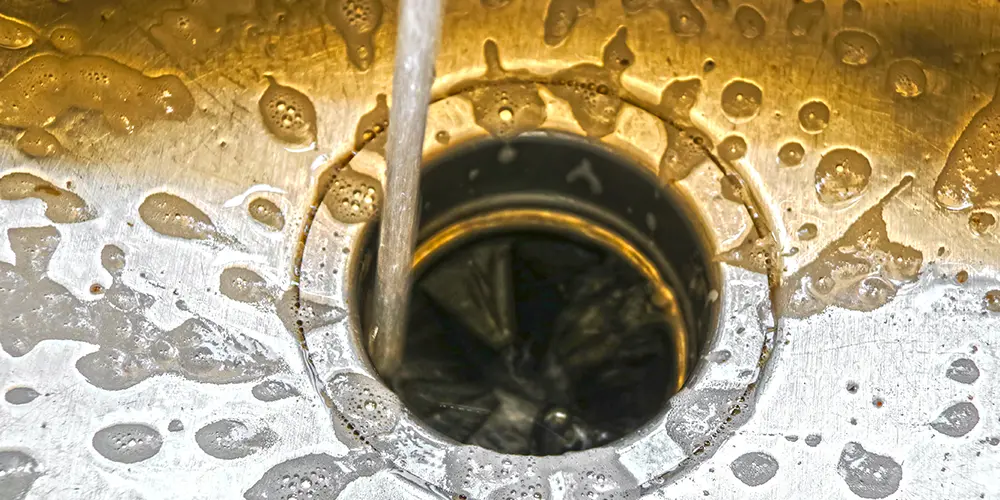
Cleaning your garbage disposal regularly helps prevent bad smells, clears minor clogs, and extends its lifespan. Keep it in good shape with common household items like baking soda, white vinegar, ice cubes, and citrus peels. Always unplug the disposal before cleaning it by hand, and avoid putting fibrous foods, grease, or coffee grounds down the drain to keep it running efficiently.
The Dirty Truth
Your garbage disposal does the dirty work no one else wants to deal with. It chews up scraps, keeps your sink clear, and asks for very little in return until it starts smelling like something crawled in there and gave up. If you overload it or mistreat it, it’s eventually going to stage a smelly, noisy protest.
Keeping it clean is simple and inexpensive. With a few pantry staples and a little routine care, you can keep your disposal running smoothly and smelling fresh.
A well-maintained disposal runs efficiently and saves you from the dreaded emergency plumber’s bill later on. Learn how to keep your kitchen’s most overlooked appliance in top shape.
Why Regular Cleaning Matters
Your disposal isn’t a magical food black hole. Over time, bits of food, grease, and grime build up inside.
That can lead to:
- Funky odors (the kind you definitely notice when you walk into the kitchen)
- Slower-draining water
- A louder, harder-working motor
- More wear and tear (aka: future repair bills)
A quick clean every few weeks helps avoid all of that and keeps it running as it should.
Signs Your Disposal Needs Attention
Not sure if it’s time for some maintenance? Your disposal will let you know. If your disposal is acting a little temperamental, look for these tell-tale signs:
- The Funk: A persistent, mysterious odor, even when the sink is empty.
- The Sluggishness: Water drains slowly, suggesting a partial clog.
- The Racket: Your disposal sounds like it’s grinding gravel or struggling to breathe.
- The “Reset” Shuffle: If you find yourself crawling under the sink to hit that little red button on the bottom, your motor is working way too hard.
How to Clean Your Garbage Disposal
You don’t need special tools or harsh chemicals, just simple, effective methods.
1. Cut the Power (Seriously—Do This First!)
Before you stick your hand or a brush down the drain, unplug the disposal. If it’s hardwired (meaning it has a wall switch but no plug), flip the breaker in your electrical panel. Don’t gamble with your fingers!
2. Scrub the Splash Guard
The rubber flaps at the top (the baffle) are where the real grime lives. It catches all the “splatter” and grease.
- If it’s removable, pull it out and scrub it with an old toothbrush, warm water, and dish soap.
- Don’t forget the underside! That’s where the bacteria and the smell love to hide.
- If it doesn’t pop out, use the toothbrush to scrub the underside of the flaps.
3. Baking Soda + Vinegar = Cleaning Magic
This is a classic for a reason. It loosens the sludge without using harsh chemicals.
- Pour: Put 1/2 cup of baking soda down the drain.
- Fizz: Follow it with 1 cup of white vinegar.
- Wait: Let the mixture bubble away for 10–15 minutes.
- Flush: Pour a pot of boiling water down the drain to clear out the loosened gunk.
4. Ice + Salt for a Deep Clean
To sharpen the impellers (the metal teeth) and knock off stubborn residue, you need an abrasive.
- Fill the disposal with two cups of ice cubes.
- Pour a cup of rock salt (or coarse sea salt) over the ice.
- Run the disposal with cold water until the ice is gone. The ice acts like a scrub brush, and the cold water keeps grease solid so it can be blasted away.
The ice knocks debris loose, while the salt scrubs things down.
5. Use Citrus for a Fresh Finish
Drop a few lemon or orange peels into the disposal while running it with cold water. It won’t clean it per se, but it makes your disposal and kitchen smell fresh and clean.
Smart Habits That Keep Your Disposal Running Longer
If you want your disposal to last a decade or more, follow these golden rules:
- Use cold water: Run cold water before, during, and after you use the disposal. It keeps fats and oils solid, so they grind up easily.
- Avoid the hot water trap: Never run hot water while grinding food; it melts grease, which then coats your pipes and solidifies later, creating a “fatberg” nightmare. Use hot water after you’re done using the disposal.
- Consistency matters: Even if you aren’t grinding anything, run the unit for a few seconds every couple of days to prevent rust and keep the parts from seizing up.
- The “slow and steady” approach: Your disposal isn’t meant for an entire dinner’s worth of leftovers! Those belong in the trash or compost bin. Feed it scraps in small, manageable chunks.
What NOT to Put Down Your Disposal
Some things just don’t belong in there, no matter how convenient it seems. Don’t stuff large quantities of food down the disposal at once; it’s designed to handle small scraps gradually, not large amounts of bulk waste. That’s what you have a compost bin or trash can for.
Avoid:
- Fibrous foods: Celery, corn husks, and asparagus are basically industrial-strength twine that will tangle around the impellers.
- Grease/fat/oil: Pouring grease down the drain is a one-way ticket to a plumbing clog.
- Coffee grounds: They turn into a sludge that acts like cement in your pipes.
- Rice: Cooked or uncooked, rice can swell and clump inside your pipes, making it a recipe for disaster.
- Pasta: Even after it’s cooked, pasta continues to absorb water, which can cause it to expand and block your plumbing.
- Eggshells: The membrane can stick to the grinding ring, and the shells themselves create a sand-like sediment that ruins drains.
When It’s Time to Call a Pro
Sometimes, cleaning won’t cut it.
You may need professional help if:
- The unit is leaking from the bottom
- It hums but won’t spin (even after trying to unjam it)
- It keeps shutting off despite resets
At that point, a plumber can tell you whether it’s repairable or ready for replacement.
Keep It Simple, Keep It Clean
A well-maintained garbage disposal doesn’t need much, just a little attention every few weeks.
Stick to the basics:
- Quick clean with baking soda + vinegar
- Occasional ice treatment
- Regular splash guard scrubbing
Do that, and you’ll avoid smells, clogs, and one of those disastrous kitchen moments that seem to happen when you’re hosting a crowd on a holiday.
FAQs: Cleaning Your Garbage Disposal
Q: How often should I clean my garbage disposal?
About every 2–3 weeks for basic cleaning. Do a deeper clean (ice + salt) every couple of months.
Q: Can I use bleach to kill the smells?
Please don’t. Bleach is too harsh for the rubber and plastic components, won’t actually break down the grease buildup, and might even make it stickier.
Q: Why does my disposal smell even after cleaning?
If it still smells, you likely missed the “nooks and crannies” on the splash guard. Pull it out again and really go to town with the toothbrush and soap.
Q: Is boiling water okay for the disposal?
Yes! Boiling water is excellent for the rinsing phase of cleaning to melt away loosened grease. Just don’t use it while you are actively grinding up food.
Q: My disposal hums but doesn’t spin—what now?
It’s probably jammed. Turn off the power, then manually loosen it from the bottom with an Allen wrench.
Q: Can I use store-bought drain cleaners?
Skip them. They are designed to eat through clogs, but their corrosiveness can damage the internal metal components of your disposal and the PVC piping in your home.
Q: What is that red button on the bottom of the unit?
That is the overload protector. If the motor gets too hot or tries to grind something it can’t handle, it “trips” to prevent the motor from burning out. Clear the jam, let it cool for a couple of minutes, and press it back in to reset.
Q: Does maintenance actually save me money?
Absolutely. A jammed or overworked motor burns out fast. Replacing a motor is pricey; a box of baking soda and a bottle of white vinegar are cheap.