Learn which plumbing tools every homeowner should keep on hand for common DIY repairs and routine maintenance. From stubborn clogs to dripping faucets, the right tools can help you tackle small problems before they turn into expensive plumbing disasters. Best of all, you don’t need to be a professional plumber to use them.
Build a Plumbing Toolkit You’ll Actually Use
No matter the age of your home, plumbing problems eventually show up uninvited. A toilet starts running at 2 a.m., the kitchen sink clogs right before Thanksgiving guests arrive, or a small leak quietly drives up your water bill month after month. That’s why having a few reliable plumbing tools on hand is one of the smartest investments a homeowner can make.
You don’t need a garage full of professional equipment or years of experience to handle many common plumbing issues. With a handful of basic tools and a little confidence, you can fix minor problems safely, avoid unnecessary service calls, and keep your home running smoothly.
Think of it this way: a basic toolkit today can save you from a very expensive “surprise waterfall under the kitchen sink” tomorrow.
Here are the essential plumbing tools every homeowner should keep within easy reach.
The Core Plumbing Toolkit
1. Flange Plunger and Cup Plunger
Yes, you actually need two plungers. A flange plunger is designed specifically for toilets and has an extended rubber flap that creates a tight seal. A cup plunger has a flat bottom and works best on sinks and tubs.
A good plunger solves more household emergencies than almost any other plumbing tool. And when you need one, you really need one.
Best for: Clearing minor clogs in toilets, sinks, and bathtubs.
2. Tongue-and-Groove Pliers
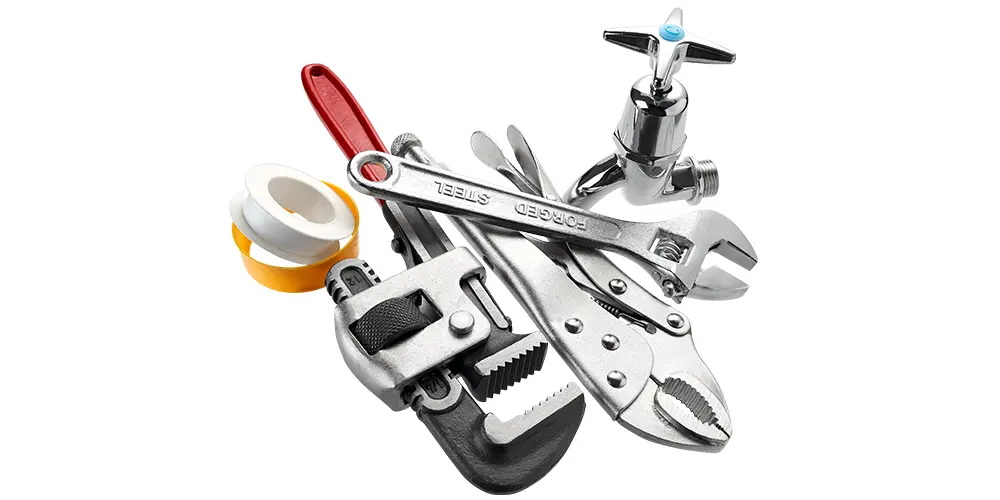
Often called Channellock pliers, these adjustable pliers can grip pipes, nuts, and fittings of different sizes. The long handles provide excellent leverage without requiring superhuman forearm strength.
Best for: Gripping, tightening, pulling, and turning plumbing fittings.
Pro tip: Wrap a rag around chrome fixtures before using the pliers to avoid scratching the finish. Nothing says “DIY project” quite like accidentally leaving tooth marks on your faucet.
3. Adjustable Pipe Wrench
A pipe wrench is the heavyweight champion of plumbing tools. Its serrated jaws grip round metal pipes tightly to loosen or tighten threaded connections.
For better control, use two pipe wrenches at once — one to stabilize the pipe and the other to turn the fitting. Be sure to avoid over-tightening, especially on older pipes that may already be fragile.
Best for: Working with galvanized steel or iron pipes.
Skill level: Intermediate.
4. Basin Wrench
If you’ve ever tried reaching behind a sink faucet with regular tools, you already know why basin wrenches exist. Their long shaft and swiveling jaw are specifically designed for those awkward, cramped spaces beneath sinks.
This is one of those tools you may not use often, but when you do, it feels like plumbing magic.
Best for: Installing or removing kitchen and bathroom faucets.
5. Plumber’s Tape (Teflon Tape)
Plumber’s tape is inexpensive, easy to use, and incredibly useful. It seals threaded pipe connections to help prevent leaks and improve watertight seals.
Best for: Sealing threaded plumbing joints.
Pro tip: Wrap the tape clockwise around the threads to keep it in place as you tighten the fitting. A few wraps now can save you from mysterious drips later.
6. Hand Auger (Plumber’s Snake)
When a plunger isn’t enough, a hand auger steps in. This flexible cable reaches deep into drains to break apart or pull out stubborn clogs that may be hiding farther down the line.
Fair warning: what comes back out of the drain may test your emotional resilience.
Best for: Clearing deep clogs in sinks, tubs, and showers.
7. Tubing Cutter
A tubing cutter creates smooth, clean cuts on copper, PVC, or PEX piping. Clean cuts matter because rough edges can lead to weak connections and leaks.
Best for: Accurately and cleanly cutting plumbing pipes.
Efficiency tip: Precise cuts make fittings easier to install and help create more reliable, leak-free connections.
8. Plastic Drain Snake
These inexpensive drain cleaners are long, flexible plastic strips with little barbs or teeth that grab hair and gunk from bathroom sinks, tubs, and shower drains. The flexible barbed strip reaches into the drain and pulls out trapped hair and debris without harsh chemicals. They’re affordable, easy to use, and surprisingly effective. Even if your bathroom drain isn’t clogged, using one regularly will help prevent a clog from forming.
Be prepared: The gunk it pulls up can be nasty!
Know the Location of Your Water Main Shut-Off Valve
One of the most important things every homeowner should know has nothing to do with tools: the location of the main water shut-off valve. If a pipe bursts or a major leak starts, shutting off the water quickly can prevent serious damage to floors, walls, and cabinets. In many homes, the shut-off valve is located near the water meter, in the garage, or along an exterior wall. It’s a good idea to test the valve occasionally so it doesn’t seize up over time, because discovering it’s stuck during a plumbing emergency is nobody’s idea of having a good day.
When It’s Time to Call a Professional
DIY plumbing can save money and build confidence, but some problems are best left to the professionals.
If you notice low water pressure throughout the house, frequent recurring clogs, water discoloration, or unexplained running water sounds, you could be dealing with a larger issue hidden inside your plumbing system. Main sewer line problems, pipe corrosion, and hidden leaks often require specialized equipment and expertise.
You should also call a plumber immediately for emergencies like burst pipes, sewage backups, or water heater failures. Acting quickly can prevent major water damage and much larger repair bills later.
There’s no shame in calling an expert. Sometimes the smartest DIY decision is knowing when not to DIY.
Take Charge of Your Home Maintenance
Keeping a few essential plumbing tools on hand makes everyday home maintenance far less stressful. Instead of panicking over a clogged sink or dripping pipe, you can handle many small problems yourself with confidence.
Store your tools in one easy-to-reach location so you don’t have to search through the garage while water slowly spreads across the kitchen floor. A little preparation goes a long way toward preventing water damage, minimizing costly repairs, and protecting your home.
And while you may not ever become a master plumber, having the right tools definitely puts you ahead of the average homeowner.
FAQs: Essential Plumbing Tools
Q: What is the most important plumbing tool for homeowners?
A quality plunger is probably the single most important plumbing tool to own. It can quickly solve many common toilet and drain clogs without chemicals or professional help.
Q: Do I really need both types of plungers?
Yes. A flange plunger is designed for toilets, while a cup plunger works better on flat surfaces like sinks and tubs. Using the correct type makes unclogging much easier.
Q: Can I use regular pliers instead of plumbing pliers?
Regular pliers usually don’t provide enough grip or leverage for plumbing work. Tongue-and-groove pliers are specifically designed to grip pipes and fittings more securely.
Q: When should I use a hand auger instead of a plunger?
If plunging doesn’t clear the clog or if water continues to drain slowly, a hand auger can reach deeper into the pipe to remove the blockage.
Q: Is plumber’s tape reusable?
No. You should use fresh plumber’s tape every time you disconnect and reconnect a threaded plumbing joint.
Q: How can I avoid scratching faucets and fixtures?
Place a rag or soft cloth between metal tools and finished surfaces before tightening or loosening fittings.
Q: Are these tools safe to use in older homes?
Generally, yes. However, older homes may have brittle galvanized pipes or aging fittings, so use gentle pressure and avoid over-tightening connections.
Q: When should I throw in the towel on a DIY repair and call a plumber?
Call a professional if you’re dealing with burst pipes, sewer backups, major leaks, water heater issues, or any plumbing problem you’re uncomfortable handling safely.