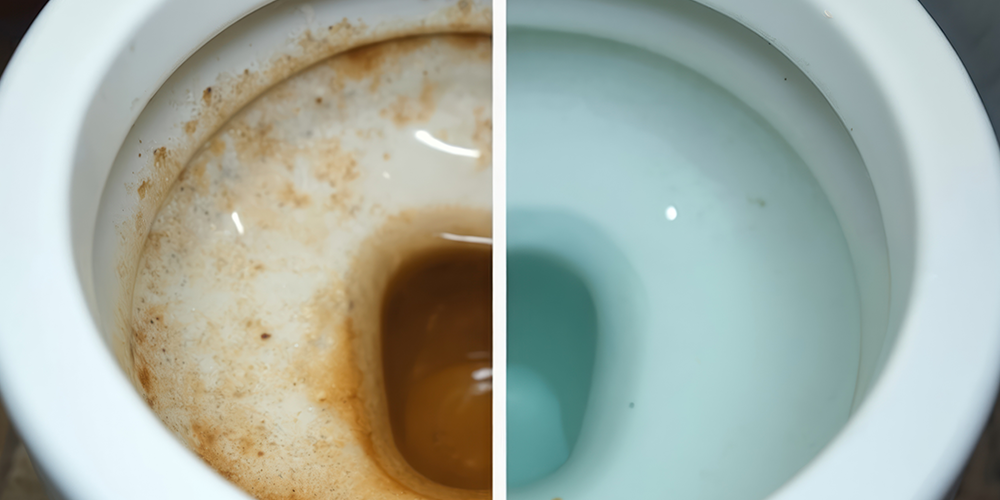
Got a stubborn toilet stain that just won’t go down without a fight? Don’t worry — you don’t need a chemistry degree or a cart full of harsh cleaners to win this battle.
A simple combination of white vinegar + baking soda can break down hard-water minerals like a charm. Let it fizz, give it a good scrub, and you’re on your way to a sparkling bowl. For tougher stains, like rust or calcium rings, a wet pumice stone can be your secret weapon.
And some of the best advice is to be consistent with regular cleaning, which keeps stains from settling in and saves you a whole lot of scrubbing later.
Getting Your Toilet Back to It’s Throne-Worthy Shine
In Southern California, hard water is part of what we have to live with. All those extra minerals love to hang out in your toilet, forming rings and deposits that don’t exactly whisper “fresh and clean.”
If you’ve ever scrubbed and scrubbed only to see stains stick around, you’re not alone. Most everyday cleaners just don’t cut it against heavy mineral buildup.
But you don’t need pricey or harsh chemicals to fix it. A few simple, eco-friendly items you already have at home can do the trick.
In this guide, we’ll walk you through:
- How to identify common toilet stains
- The best ways to tackle each one
- When it actually makes sense to use stronger cleaners
- Easy habits to keep your toilet looking its best
Understanding Your Toilet Bowl Stains
Before you start scrubbing, it helps to know what you’re up against. Different stains need different strategies.
Here are the most common suspects:
Hard water rings
- Chalky or dark rings at the waterline
- Caused by calcium and magnesium buildup
- Common in dry, warm climates
Rust stains
- Reddish-brown streaks
- Often from iron in pipes or well water
Copper stains
- Blue or green discoloration
- Caused by acidic water reacting with copper pipes
Once you know the type of stain, you can choose the best method to remove it.
The Vinegar & Baking Soda Method
For everyday stains and hard-water rings, this classic combo really delivers. It’s safe, effective, and won’t leave your bathroom smelling like a chemical factory.
1. Gather Your Supplies
You’ll need:
- White vinegar (about 2 cups)
- Baking soda (1 cup)
- A sturdy toilet brush
- Rubber gloves
2. Apply the Vinegar
Pour one cup of vinegar into the bowl. Give it a quick swirl with your brush to coat the stains. Let it sit for about a minute.
3. Add the Baking Soda
Add 1 cup of baking soda, then add another cup of vinegar. Watch the magic happen as it starts fizzing away. Let it sit for 10–15 minutes.
4. Scrub and Flush
Glove up and scrub thoroughly, especially around the waterline and under the rim. Then flush it all away and admire your work.
Using a Pumice Stone
Some stains just don’t respond to liquid cleaners. When that happens, it’s time to bring in a pumice stone.
1. Prepare the Pumice Stone
Always wet the stone first—dry pumice can scratch porcelain. Let it soak for about a minute.
2. Gently Scrub the Stain
Lightly rub the stone over the stain. It will form a fine paste that helps lift mineral deposits without damaging the surface.
3. Rinse the Area
Flush to rinse everything away. Your toilet should look noticeably cleaner; no heavy scrubbing required.
Tackling Persistent Rust Stains
Rust stains need something a bit more targeted. A simple DIY paste works wonders:
- Mix ½ cup of borax with enough lemon juice to form a thick paste
- Apply directly to the stain
- Let it sit for 2 hours (or overnight for stubborn spots)
- Scrub and flush
It’s tough on rust but still easy on your toilet.
When Stronger Cleaners Are Needed
Most of the time, natural methods will do the trick. But every now and then, you’ll run into a stain that refuses to budge, no matter how much elbow grease you throw at it.
That’s when stronger cleaners can help, but it’s all about choosing the right one.
CLR (Calcium, Lime, Rust Remover)
- Designed specifically for mineral buildup and rust
- Works faster on stubborn hard-water stains
- Best used occasionally, not as a weekly cleaner
- Use gloves and good ventilation
TSP (Trisodium Phosphate)
- A heavy-duty cleaner meant for walls and tough surfaces
- Very strong and not designed for toilet bowls
- Can be harsh on your skin and the environment
- Generally not recommended for this job
If vinegar and baking soda don’t remove those tough mineral deposits, CLR is a reasonable next step. TSP, on the other hand, is usually overkill—your toilet doesn’t need that level of muscle.
Long-Term Maintenance & Prevention
Cleaning your toilet doesn’t have to feel like a chore you dread. With the right approach and a little consistency, you can keep things fresh, clean, and guest-ready without breaking the bank. A little maintenance now keeps those stains from staging a comeback later.
Here are a few simple habits that make a big difference:
Weekly Refresh
- Pour ½ cup of vinegar into the bowl
- Let it sit for 30 minutes
- Scrub and flush
Stay Consistent
- A little effort each week beats a deep-clean marathon later
Consider a Water Softener
- Helps reduce mineral buildup throughout your home
- Protects appliances (and your toilet) long-term
FAQs: Removing Stains from a Toilet Bowl
Q: How often should I clean my toilet bowl to prevent stains?
You should lightly scrub your toilet bowl once a week with a mild, natural cleaner, such as white vinegar. This prevents minerals from forming stubborn rings.
Q: Can I use bleach on hard water stains?
No. Bleach disinfects but doesn’t dissolve mineral buildup, and it can actually darken rust stains.
Q: Is a pumice stone safe for all toilets?
A wet pumice stone is safe for standard porcelain. Avoid using it on colored porcelain, marble, or plastic parts, as it may scratch them.
Q: Can I use cleaners such as Lysol to remove toilet bowl stains?
Cleaners such as Lysol are great for disinfecting and keeping your toilet fresh, but they aren’t designed to remove tough mineral stains, such as hard-water rings or rust. For best results, use a cleaner like Lysol as part of your regular weekly cleaning routine, and switch to vinegar, baking soda, or a product like CLR when you need to tackle visible stains.
Q: Do dishwasher tablets actually clean toilet bowls?
Yes—they can help with hard-water stains. Drop one in, let it dissolve for 15–30 minutes (or overnight), scrub, and flush.
Q: What is the best sustainable cleaner for rust?
A paste made from borax and lemon juice works well for rust. Citric acid breaks it down, while borax provides gentle scrubbing power.
Q: How do low-flow toilets affect stains?
Low-flow toilets use less water, which can cause minerals to build up faster. More frequent brushing helps prevent rings.
Q: Why does my toilet get pink stains?
Pink stains are caused by an airborne bacterium found in damp spaces. Clean them with baking soda paste or a mild disinfectant.